


April 27. 2026
How AI Voice Recorders Turn Everyday Conversations Into Searchable Knowledge?
IIdeas often disappear for a simple reason: they are spoken once and never properly captured.
A useful insight may emerge during a client discussion, a research conversation, a brainstorming session, a commute, or a casual conversation with a colleague. Traditional note-taking requires someone to stop listening, open a notebook or phone, and turn the idea into text. A conventional recorder solves only half the problem because an audio file is difficult to search and organize.
The newer generation of AI voice recorders approaches the problem differently. Instead of treating audio as the final product, these devices can turn spoken information into transcripts, summaries, topics, and searchable knowledge.
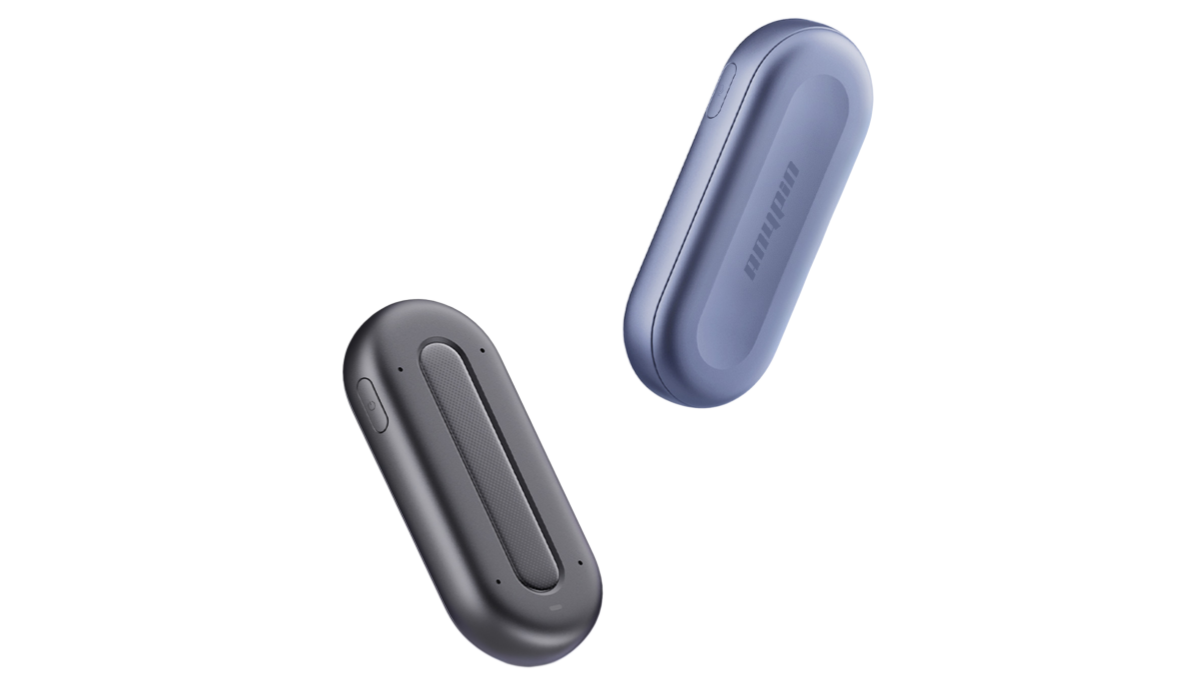
ANYPIN Note Pod P1, for example, combines recording with AI transcription, speaker labels, topic-based segmentation, summaries, and GPT-5-powered search. Its purpose is not simply to store conversations but to make the information inside those conversations easier to retrieve later.
Why Audio Alone Is Not a Knowledge System?
Recording everything does not automatically make information easier to use.
Imagine having 50 recordings saved on a device. Even if every file is clearly dated, finding a particular discussion can still require listening to multiple recordings. Audio preserves information, but it does not automatically provide a practical way to retrieve it.
Transcription changes that relationship.
Research on digital transcription describes transcription as a way of converting raw audio into an accessible written format suitable for data management, analysis, and creating an auditable record.
Once speech becomes text, it can be searched, categorized, summarized, and connected with other information.
This creates an important distinction:
A recorder stores conversations. An AI knowledge workflow makes conversations usable.
The Four Stages of Turning Speech Into Knowledge
1. Capture the Original Conversation
The first stage is still recording.
Good audio capture matters because every later step depends on the quality of the source material. If voices are unclear or important sections are missing, even sophisticated AI cannot completely reconstruct what was said.
For everyday use, a dedicated device can also be more convenient than opening a smartphone application every time an important conversation begins.
ANYPIN Note Pod P1 uses a four-microphone array and supports hands-free configurations including a clip, necklace, and pin. It also offers 64GB of storage and up to 20 hours of continuous recording.
2. Convert Speech Into Searchable Text
The second stage is AI transcription.
Instead of replaying an entire recording, users can search for a phrase, topic, name, or concept within the transcript.
ANYPIN states that its system supports transcription in more than 120 languages, along with noise reduction and speaker labels.
This is especially useful when recordings accumulate over weeks or months. A voice archive becomes much more valuable when information can be found by content rather than by filename.
3. Add Structure to the Transcript
A transcript is useful, but a wall of text is still difficult to process.
The next step is structure. AI can identify topics, summarize sections, and organize information according to the purpose of a recording.
ANYPIN supports topic-based audio segmentation and structured AI summaries, with templates designed for different scenarios such as interviews, lectures, and creative sessions.
For example, a brainstorming recording might become:
Search Changes How You Use Your Recordings
One of the biggest advantages of an AI recorder is not transcription itself. It is retrieval.
Consider a salesperson who has recorded dozens of customer conversations. A conventional recorder forces the salesperson to remember approximately when a particular customer mentioned a requirement.
With searchable AI notes, the question can become much simpler:
"Which customer conversations mentioned a need for automated packaging?"
The system can potentially surface relevant content without requiring the user to remember the recording date.
ANYPIN's lecture workflow illustrates the same concept. Its platform allows users to search recordings and ask questions about recorded material rather than manually scrolling through lengthy audio files.
This changes recording from an archival activity into an information-retrieval tool.
From Personal Notes to a Personal Knowledge Base
A major opportunity for AI recording is the gradual construction of a personal knowledge base.
Instead of keeping isolated voice memos, users can consistently capture:
Ideas
Decisions
Research observations
Customer feedback
Project discussions
Learning notes
Interview insights
Creative concepts
Over time, these recordings can become a searchable collection of experiences and information.
Research into speech as a knowledge resource has previously proposed using recorded spoken discussions and automatic speech recognition to capture tacit knowledge that might otherwise remain undocumented.
The idea is particularly relevant today because AI makes it easier to process large quantities of spoken material.

AI Summaries Are Useful, But They Are Not the Original Source
There is an important limitation to remember.
An AI-generated summary is an interpretation of a recording, not the recording itself. A summary may omit details that become important later.
For that reason, a good best voice recorder with AI transcription should ideally preserve access to the original audio and transcript alongside the generated summary.
ANYPIN's workflow combines recordings, transcripts, summaries, and searchable content rather than treating the summary as the only version of the information.
This creates a useful hierarchy:
Original audio → Transcript → Structured summary → Searchable insight
Each layer serves a different purpose.
Where This Workflow Can Make the Biggest Difference?
The value of AI recording depends heavily on repetition.
For a person who records one short memo every few months, a standard voice recorder may be enough. But for someone who regularly handles information-heavy conversations, the benefits compound.
A researcher can build a searchable collection of interviews. A consultant can preserve project discussions. A salesperson can revisit customer requirements. A student can build a searchable archive of learning material. A creative professional can capture ideas before they disappear.
The key is consistency.
An AI recorder becomes more useful when it is part of a repeatable process: capture → transcribe → organize → retrieve → review.
How to Use AI Recording Responsibly?
Searchability also makes privacy more important.
Recordings can contain names, opinions, business information, or other sensitive details. Users should understand applicable laws, organizational policies, and consent requirements before recording other people.
AI transcription should also be reviewed when accuracy is important. Even advanced speech recognition can struggle with accents, overlapping speakers, technical terminology, or poor audio conditions. Research on intelligent speech recognition also highlights how AI-assisted transcription can change traditional transcription workflows and reduce the manual effort involved in processing recorded speech.
The objective should therefore be to use AI to reduce information-management work—not to remove human judgment.
Is an AI Voice Recorder Worth It?
The answer depends on what happens after recording.
If you only need an audio file, a conventional recorder may be sufficient. But if you regularly need to find, understand, organize, and reuse spoken information, an AI-powered workflow can provide considerably more value.
ANYPIN Note Pod P1 represents this broader approach. Instead of ending with an audio file, it connects recording with transcription, summaries, topic organization, speaker labels, and AI-powered search.
That is the real shift in modern voice recording: the goal is no longer simply to remember what was said, but to make what was said useful later.
FAQs
What is an AI voice recorder?
An AI voice recorder is a recording device or system that combines audio capture with functions such as automatic transcription, speaker recognition, summaries, organization, and search.
Can AI recordings become part of a personal knowledge base?
Yes. When recordings are consistently transcribed, organized, and tagged, they can form a searchable collection of ideas, discussions, research, and decisions.
Why is transcription important for recorded conversations?
Audio is difficult to search directly. Transcription converts spoken information into text, making specific concepts and phrases much easier to locate.
Is an AI summary enough to replace the original recording?
No. A summary can omit details or context. For important information, retaining the original audio and transcript provides a way to verify what was actually said.
What makes ANYPIN different from a traditional recorder?
ANYPIN combines dedicated recording hardware with AI transcription, speaker labels, topic segmentation, summaries, pins, multimodal input, and GPT-5-powered search.
Who can benefit from an AI recording workflow?
Researchers, consultants, students, sales professionals, project teams, journalists, interviewers, and anyone who frequently needs to preserve and retrieve spoken information can benefit.